
The ISTE Standards for Students provide a framework for how learners can use technology effectively and responsibly in education. These standards focus not only on technical skills but also on critical thinking, creativity, communication, and ethical behavior. In today’s digital learning environment, students are expected to go beyond basic use of technology and develop the ability to apply digital tools in meaningful ways. The ISTE standards help guide this process by encouraging students to become active participants in their own learning. By following these standards, students can improve their ability to learn independently, collaborate with others, and solve problems using technology. These skills are essential for success in both academic settings and real-world situations.
Introduction and Purpose
Open Educational Resources, or OER, are teaching and learning materials that are free to access and openly licensed for educational use. OER can include textbooks, lesson plans, videos, practice activities, websites, simulations, images, and other digital materials that support learning.
The purpose of this page is to help students, families, and educators understand what OER are, why they matter, and how they can be used responsibly. OER support learning by reducing cost barriers, increasing access to high-quality materials, and allowing educators to adapt resources for different learners.
OER are especially useful in technology-supported learning environments because students can access materials anytime, revisit lessons, and learn at their own pace. When selected carefully, OER can also support inclusive learning by giving students multiple ways to engage with content.
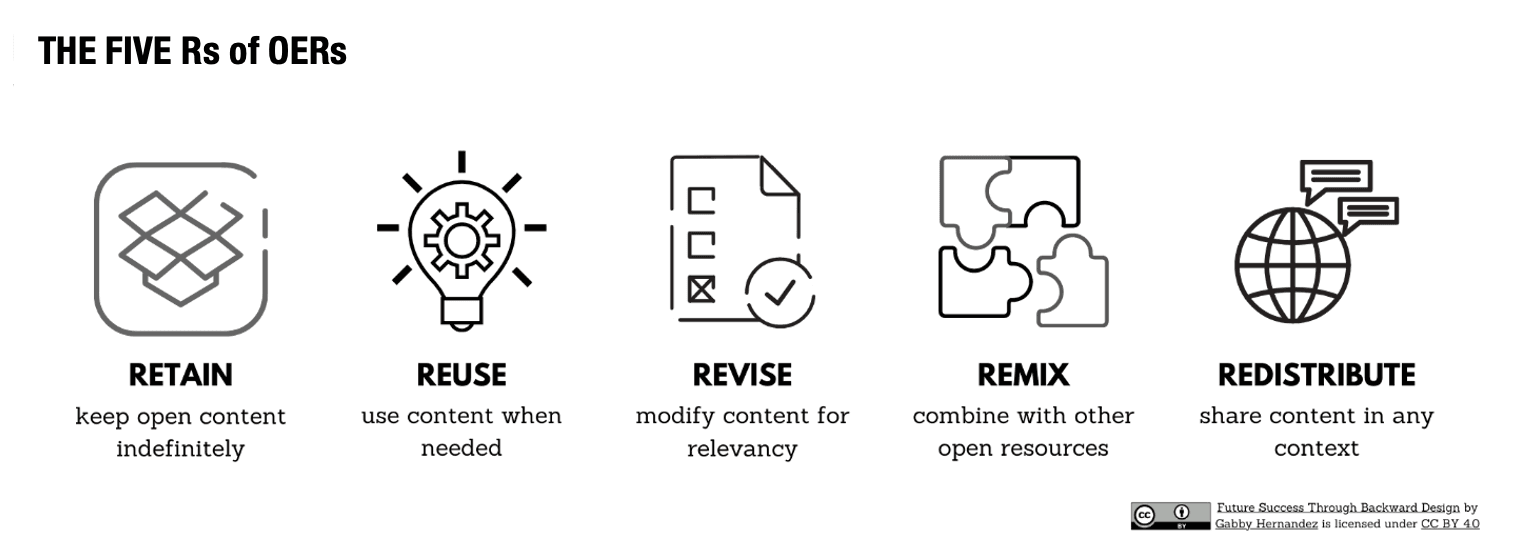
The 5Rs explain how openly licensed resources can be kept, reused, adapted, combined, and shared.
What Makes a Resource OER?
A resource is not automatically OER just because it is free online. To be considered OER, the material should be openly licensed or in the public domain so users know how it may be used, shared, and adapted.
A helpful way to understand OER is through the 5Rs: retain, reuse, revise, remix, and redistribute. This means users may keep a copy of the resource, use it in teaching or learning, change it for a specific purpose, combine it with other materials, and share it with others when the license allows.
This is important because students and educators need to understand the difference between “free to view” and “free to reuse.” A website, video, or image may be available online, but it may still be protected by copyright. OER should clearly state permission through a Creative Commons license, public domain label, or other open license.
Why OER Matters
OER matters because access to learning materials is an equity issue. When students cannot afford textbooks, paid platforms, or supplemental resources, they may have fewer opportunities to learn and practice. OER helps reduce those barriers by making learning materials available at no cost.
OER also supports social justice because educators can adapt materials for different learners, cultures, languages, reading levels, and accessibility needs. This flexibility allows teachers to create learning experiences that better reflect the students in their classrooms.
In schools, OER can support students, teachers, families, and administrators. Students benefit from free access to learning materials. Teachers benefit from resources they can adapt. Families benefit because students can continue learning outside the classroom. School leaders benefit because OER can support more inclusive and cost-effective learning environments.
Examples of OER Resources
Students and educators can use many OER platforms to find free and openly licensed learning materials. Useful examples include OER Commons, MERLOT, OpenStax, and other open resource collections recommended by libraries and educators.
OER Commons provides lessons, activities, textbooks, and other educational materials that can be searched by subject, grade level, and license. MERLOT allows users to browse open-source learning materials by discipline. OpenStax provides free open textbooks that can support students and teachers in many subject areas.
When choosing an OER resource, students and educators should check the title, author or organization, description, license, date, and purpose. A strong OER resource should be accurate, appropriate for the learner, accessible, and clearly licensed.
How Students Can Use OER
Students can use OER to review lessons, practice skills, study independently, and explore topics beyond classroom instruction. For example, a student learning English may use an open vocabulary activity, grammar lesson, reading passage, or video tutorial to practice outside class.
Students should use OER actively, not passively. This means taking notes, checking understanding, comparing resources, asking questions, and applying what they learn to assignments or projects. Students can also use OER to create study guides, vocabulary lists, presentations, or learning reflections.
Students should always pay attention to the source and license of an OER resource. If they use information, images, videos, or activities from an OER source, they should give credit to the creator or organization when required.
How Teachers Can Use OER
Teachers can use OER to supplement lessons, create practice activities, adapt materials for different learners, and provide additional resources for students and families. Because OER can often be revised or remixed, teachers can adjust materials to match student needs, classroom goals, language levels, and accessibility requirements.
Teachers should also review OER carefully before using it. A useful OER resource should be accurate, age-appropriate, accessible, culturally respectful, and aligned with learning goals. Teachers should check whether the license allows them to reuse, revise, remix, or share the material.
OER can also support collaboration among teachers. Educators can share resources, improve lessons together, and build collections that benefit students across classrooms or schools.
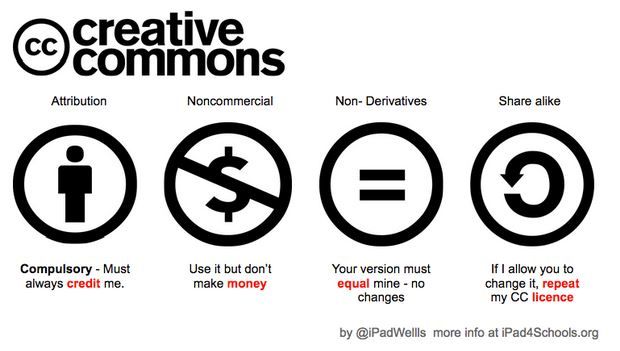
Creative Commons licenses help users understand how resources may be reused, adapted, and shared.
Copyright, Creative Commons, and Attribution
OER should be used with respect for copyright and licensing rules. Creative Commons licenses help creators explain how others may use their work. Some licenses allow users to copy, adapt, and share the material as long as credit is given. Other licenses may limit commercial use or prevent changes.
Students and teachers should not assume that everything online can be copied into a website, presentation, or assignment. Before using a resource, check whether it is public domain, Creative Commons licensed, or clearly marked as open for educational use.
A simple attribution should include the title of the resource, creator, source or link, license, and any changes made. For example: “Grammar Practice Activity” by Author Name, licensed under CC BY 4.0, adapted for classroom use.
OER and Inclusive Learning
OER can help create a more inclusive learning environment when educators choose and adapt resources with students’ needs in mind. Inclusive OER should consider language, reading level, culture, disability access, technology access, and different learning styles.
For example, a teacher may adapt an OER reading activity by adding vocabulary support, captions, audio, images, or alternative formats. A resource can also be revised to include examples that are more relevant to students’ lives and communities.
OER is most powerful when it is not only free, but also usable, accessible, and meaningful. Responsible use of OER helps students participate more fully in learning.

OER can support inclusive learning when resources are accessible, adaptable, and relevant to students.
Recommended OER Resources
Below are examples of OER resources that students and educators can explore:
OER Commons offers free teaching and learning materials, including lessons, activities, and resource collections. It is useful for finding classroom resources by subject, grade level, and license.
MERLOT provides open learning materials organized by discipline. It can be useful for locating digital learning objects, lessons, and educational media.
OpenStax provides free open textbooks and learning materials. These resources can support students who need accessible and cost-free textbook alternatives.
Creative Commons explains open licenses and helps users understand how materials may be reused, adapted, and shared.
Library OER Guides
Library guides, such as the Edgewood University Library Copyright for Educators guide, can help teachers and students understand OER, copyright, Creative Commons, media use, and attribution.
Student Guidelines for Using OER
When using OER, students should follow these guidelines:
Check the source.
Use resources from trusted educational websites, libraries, universities, or recognized OER platforms.
Check the license.
Look for Creative Commons, public domain, or other open license information.
Give credit.
Cite or acknowledge the creator, title, source, and license when required.
Use resources for learning.
OER should help students understand, practice, create, and reflect.
Do not copy without understanding.
Students should use OER to support learning, not to avoid original thinking.
Respect copyright.
If a resource is not clearly open or licensed for reuse, ask the teacher before copying or posting it.
- Think about accessibility.
Choose resources that are readable, usable, and helpful for different learners.
Conclusion
Open Educational Resources support learning by making educational materials more accessible, flexible, and affordable. OER helps students study independently, gives teachers materials they can adapt, and supports families by extending learning beyond the classroom.
Responsible OER use also teaches important digital citizenship skills. Students learn to check sources, respect copyright, give credit, and use technology ethically. When OER is selected and adapted carefully, it can support equity, inclusion, creativity, and meaningful learning.
Open Educational Resources, or OER, are free and openly licensed teaching and learning materials that support access, equity, creativity, and student learning.
All author postsFeatured Learning Resources
-
 AI Guidelines for Students
A clear student and family guide for using artificial intelligence responsibly, ethically, and effectively in learning.